


.png)


Choosing
the right platform for your online business is one of the most consequential
decisions you'll make as an entrepreneur or digital marketer. With so many
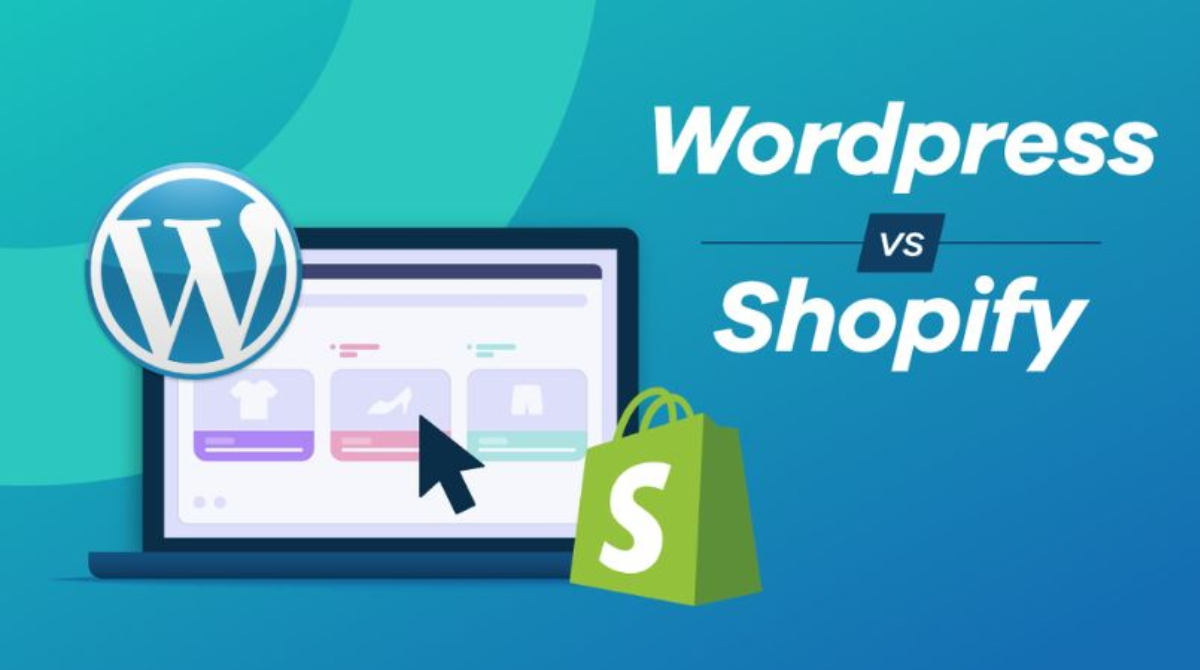
options available today, the debate around WordPress vs Shopify for
ecommerce continues to dominate conversations in boardrooms and startup
spaces alike. Both platforms are powerful, both are widely trusted, and both
have helped millions of businesses grow online but they are built with
fundamentally different philosophies, and understanding that difference is the
key to making the right choice for your specific goals.
This
guide offers an honest, in-depth comparison between WordPress and Shopify,
covering everything from ease of use and scalability to cost, SEO, and
long-term flexibility. Whether you're launching your first online store or
scaling an enterprise-level business, by the end of this article you'll know
exactly which platform belongs at the heart of your digital strategy.
Understanding the Core Difference: CMS
vs. Commerce Platform
Before
diving into the specifics, it's important to understand what each platform was
originally designed to do. WordPress is an open-source content management
system (CMS) that powers over 43% of all websites on the internet. It was built
to publish content, and over the years it evolved into a highly flexible
platform capable of supporting anything from personal blogs to complex
ecommerce stores primarily through plugins like WooCommerce.
Shopify,
on the other hand, was built from the ground up as a dedicated ecommerce
solution. It's a hosted, closed platform designed specifically to help
businesses sell products online. Its entire architecture from the dashboard to
the checkout experience is optimized around selling, not content publishing.
This
foundational difference ripples into every aspect of the two platforms: how
they're managed, how they scale, how much they cost, and how much control they
give you.
Ease of Use: Getting Your Store Live
If
you're a first-time website owner with no technical background, Shopify is
undeniably easier to get started with. You sign up, choose a theme, add your
products, and you're selling often within a day. Shopify handles hosting,
security, and software updates automatically, so you never have to worry about
the technical infrastructure.
WordPress,
while not inherently difficult, does have a steeper learning curve. Setting up
a WooCommerce store on WordPress requires you to choose a hosting provider,
install WordPress, install WooCommerce, configure plugins, and manage updates
across multiple systems. For someone unfamiliar with web development, this can
feel overwhelming without guidance.
That
said, this is precisely where professional WordPress website
development
makes all the difference. When experienced developers handle your setup,
WordPress transforms from a complex system into an incredibly powerful,
custom-built platform tailored precisely to your brand and business logic. What
feels like a disadvantage for solo operators becomes a major strategic asset
when you have the right team behind you.
Flexibility and Customization: Where
WordPress Truly Shines
If
customization is your priority and for most growing businesses it should be WordPress
has a decisive advantage. With access to over 59,000 plugins and unlimited
theme customization options, WordPress lets you build virtually anything you
can imagine. You're not boxed into a specific layout, checkout flow, or feature
set.
Want
a subscription box service with tiered pricing, a members-only content area, a
multilingual store, and a custom booking system all on the same website?
WordPress can handle it. Shopify, by contrast, operates within a more
constrained ecosystem. While it offers an extensive app store, each added app
comes with recurring costs, and deep customizations often require working
within Shopify's proprietary templating language, Liquid, which limits what
third-party developers can do.
For
businesses that have specific functional requirements or plan to grow in
non-standard directions, our WordPress development
services
offer a level of architectural freedom that Shopify simply cannot match. From
custom post types and advanced user roles to fully bespoke checkout flows, the
possibilities are genuinely limitless when WordPress is in the hands of a
skilled development team.
WordPress vs Shopify for Ecommerce: A Detailed
Breakdown
When
it comes specifically to WordPress vs Shopify for ecommerce, both
platforms are genuinely capable, but they excel in different scenarios.
Shopify's
ecommerce tools are polished, cohesive, and deeply integrated. Abandoned cart
recovery, multi-currency selling, built-in payment processing (Shopify
Payments), and a streamlined mobile checkout are all baked into the platform at
various pricing tiers. If you're running a straightforward product-based
business and want things to "just work," Shopify delivers that
experience consistently.
WordPress
with WooCommerce, however, gives you complete ownership of your data, your
checkout experience, and your customer relationships. There are no transaction
fees charged by the platform (only by your chosen payment processor), no
restrictions on which payment gateways you can use, and no artificial limits on
the number of products you can list. You also have the freedom to build deeply
personalized shopping experiences from custom product configurators to loyalty
programs and beyond.
If
you're ready to build a high-performance online store, explore our dedicated ecommerce development
services
to see how we design and build stores that convert visitors into loyal
customers.
SEO Capabilities: Long-Term Visibility
on Google
Search
engine optimization is not a feature you can bolt on after launch — it needs to
be baked into your platform from the beginning. WordPress has long been the
gold standard for SEO-friendly website architecture. With tools like Yoast SEO
or Rank Math, you gain granular control over meta titles, descriptions, schema
markup, canonical URLs, XML sitemaps, and more.
Shopify
has made meaningful improvements to its SEO capabilities in recent years, but
it still lags behind WordPress in several key areas. URL structures in Shopify
are less flexible for instance, all blog
posts must live under the "/blogs/" subdirectory and product pages
under "/products/", regardless of your preference. These limitations
may seem minor but can compound over time for businesses with large content
libraries or complex site architectures.
For
brands serious about dominating their niche through organic search, pairing
WordPress with a robust SEO
strategy
gives you a more powerful and sustainable foundation for long-term visibility.
And when SEO is supported by a consistent content marketing effort regular blog
posts, landing pages, and topic clusters WordPress becomes an unstoppable
lead-generation machine that compounds in value month after month.
Pricing: The True Cost of Each Platform
Shopify's
pricing appears straightforward on the surface plans start at $39/month (Basic)
and go up to $399/month (Advanced), with enterprise-level Shopify Plus starting
at $2,300/month. However, the real cost accumulates quickly when you factor in
third-party app subscriptions (which can range from $10 to $200+ per month
each), transaction fees if you don't use Shopify Payments, and the cost of
premium themes.
WordPress
itself is free and open-source, but you will need to pay for hosting (typically
$10–$50/month for quality managed WordPress hosting), premium themes, and
plugin licenses. For most businesses, the total cost of a professionally built
WordPress site is comparable to or lower than Shopify and crucially, that cost
gives you far more ownership and flexibility.
It's
also worth noting that with Shopify, you are essentially renting access to a
platform. If Shopify changes its pricing, discontinues features, or shuts down
an app you depend on, your business is exposed. With WordPress, you own your
website completely and that ownership is a business asset that appreciates over
time.
Maintenance, Security, and Long-Term
Support
One
of the most underrated factors in the WordPress vs Shopify debate is ongoing
management. Shopify handles all updates and security patches automatically,
which is genuinely convenient. WordPress requires more active management
themes, plugins, and the core software all need regular updates to stay secure
and performant.
This
is not a reason to avoid WordPress. It is simply a reason to invest in proper
website maintenance. Our annual maintenance and
support services
ensure your WordPress site is regularly updated, backed up, monitored for
security vulnerabilities, and optimized for speed. When something breaks or a
plugin conflicts after an update, a dedicated support team resolves it promptly
often before you even notice an issue.
For
any business that depends on its website for revenue, this level of
professional oversight is not optional; it's essential. Downtime costs money,
security breaches damage trust, and an outdated site loses ground in search
rankings. A structured maintenance plan eliminates all three risks and gives
you the peace of mind to focus on growing your business instead of managing
your infrastructure.
Switching Platforms: When It's Time to
Migrate to WordPress
Many
businesses start on Shopify because it's easy, then hit a ceiling as their
needs grow more complex. If you've found yourself constrained by Shopify's
limitations whether in customization, content strategy, or cost transitioning
to WordPress is entirely achievable with the right support.
A
professional WordPress migration handles the technical heavy lifting:
transferring your product catalog, customer data, order history, URL
structures, and SEO equity from your old platform to a fully optimized
WordPress environment. Done correctly, a migration not only preserves
everything you've built but sets you up for significantly stronger performance
going forward.
Migration
is also worth considering if you're moving from an outdated WordPress
installation, a legacy CMS, or even a custom-built site that has become
expensive to maintain. Our team at Sirsonite has successfully migrated
businesses of all sizes from boutique retailers to large-scale enterprises
without losing rankings or revenue in the process. If you're thinking about
making the switch, contact us
today
to discuss the best migration path for your business.
Choosing the Right WordPress
Development Company
Regardless
of which platform you choose, the quality of your implementation matters
enormously. A poorly built Shopify store will underperform just as surely as a
poorly built WordPress site. The real competitive advantage comes not from the
platform itself but from how intelligently it is designed, developed, and
maintained.
For
businesses serious about long-term digital growth, partnering with an
experienced website
design and development company gives you access to developers, SEO
strategists, UX designers, and project managers who understand not just the
technical side of the web, but the business context behind every decision. From
initial architecture planning through launch, ongoing maintenance, and digital
marketing, the right partner ensures your website is a genuine growth
asset not a cost centre.
At
Sirsonite, we are a full-service WordPress development company serving
businesses across India, the USA, UK, Canada, Dubai, and Australia. Whether
you're starting from scratch, migrating from another platform, or looking to
scale an existing site, our team has the expertise to help you achieve
measurable results online.
The Verdict: Which Platform Is Right
for You?
If
you're a small business owner who wants to start selling products immediately
with minimal technical involvement, Shopify is a perfectly capable starting
point. It's clean, reliable, and purpose-built for commerce.
However,
if you're building a business with serious ambitions one that depends on
content marketing, requires deep customization, values complete data ownership,
or plans to scale in ways that don't fit neatly into a templated solution —
WordPress is the better long-term investment. Backed by expert WordPress development, reliable annual maintenance and
support,
a high-converting ecommerce
setup,
and a data-driven SEO
strategy,
WordPress gives your business the foundation it needs to grow without limits.
The
question was never really "which platform is better?" The real
question is: which platform is better for your specific business, goals, and
trajectory? For most ambitious companies, the answer is WordPress and the
right development partner makes all the difference.
Ready
to build, migrate, or scale your WordPress website? Connect with the Sirsonite
team today
and let's turn your website into your most powerful business asset.
Leave a Reply
Your email address will not be published. Required fields are marked *