

.png)

.png)
Introduction:
When Artificial Intelligence Becomes Almost Human
Artificial intelligence has moved far beyond text based chatbots and voice
assistants. Today, the fusion of AI with holographic technology is redefining
how humans interact with machines. Lifelike virtual assistants capable of
speaking, responding emotionally, and appearing as three dimensional holograms are
no longer a concept from science fiction. They are rapidly becoming a reality
across industries such as retail, healthcare, education, and enterprise
services.
As customer expectations evolve toward more immersive and personalized
experiences, AI powered holograms are emerging as the next frontier in human computer
interaction.
Understanding
AI Powered Holographic Assistants
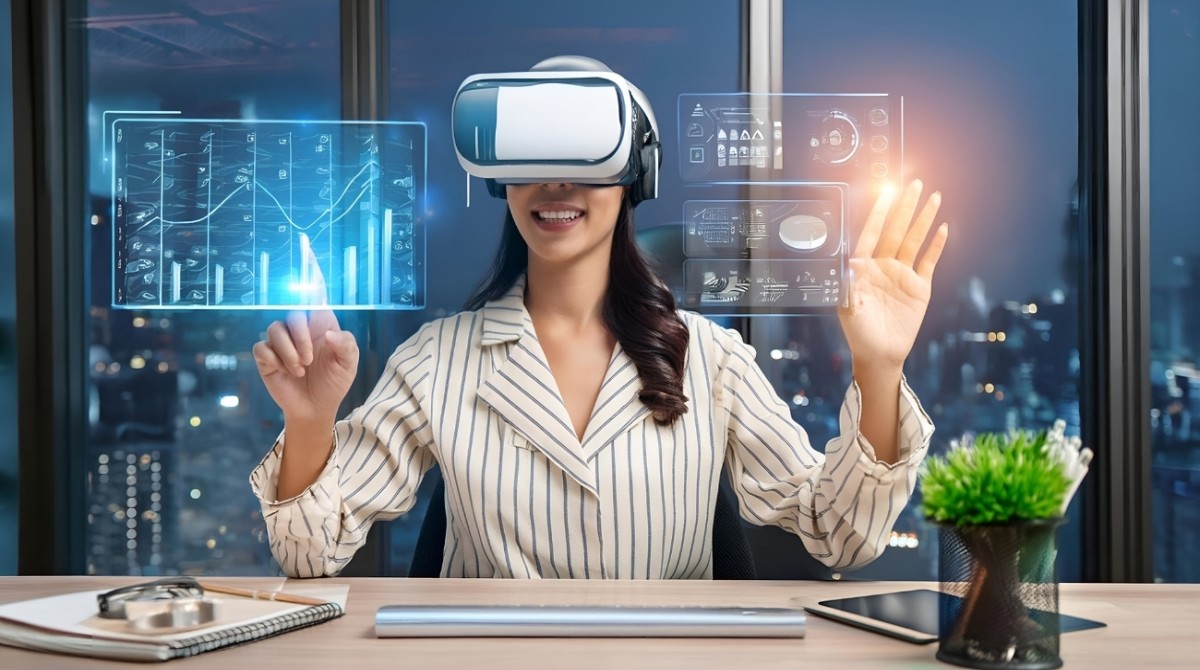
AI holographic assistants combine advanced artificial intelligence
algorithms with three dimensional projection or mixed reality displays. These
assistants are designed to simulate human like presence, facial expressions,
gestures, and conversational intelligence. Unlike traditional digital
assistants confined to screens or speakers, holographic assistants exist in
physical space, creating a sense of realism and engagement.
Machine learning, natural language processing, computer vision, and speech
recognition work together to enable these assistants to understand user intent,
respond contextually, and adapt over time. The result is an interactive
experience that feels intuitive, responsive, and almost human.
Why
Lifelike Virtual Assistants Are Gaining Momentum
The rise of lifelike virtual assistants is driven by the growing demand for
immersive digital experiences. Businesses are looking for ways to stand out in
competitive markets, and holographic AI offers a powerful solution. These
assistants provide instant engagement, consistent service delivery, and the
ability to operate around the clock without fatigue.
Another key factor is the rapid advancement in AI realism. Emotional AI,
sentiment analysis, and adaptive learning models allow virtual assistants to
recognize user moods and adjust responses accordingly. This emotional
intelligence makes interactions feel more natural and builds trust between
users and digital systems.
AI and
Holograms in Customer Experience
One of the most impactful applications of AI holograms is in customer
engagement. Retail stores, airports, hotels, and corporate lobbies are
deploying holographic assistants to greet customers, provide information, and
guide decision making. These assistants can personalize interactions based on
user behavior, language preferences, and past interactions.
Unlike static digital kiosks, holographic assistants create memorable
experiences that increase customer satisfaction and brand recall. As brands
shift toward experience driven marketing, AI holograms are becoming a strategic
asset rather than a novelty.
Transforming
Healthcare and Education
In healthcare, AI powered holographic assistants are being used for patient
guidance, virtual consultations, and medical training. They can explain complex
procedures in a visually engaging manner, reducing patient anxiety and
improving understanding. Medical institutions are also exploring holographic
simulations for training doctors and surgeons in risk free environments.
Education is experiencing a similar transformation. Holographic AI tutors
can deliver interactive lessons, answer student questions in real time, and
adapt teaching styles based on individual learning patterns. This personalized
approach enhances engagement and improves learning outcomes, especially in
remote and hybrid education models.
The
Role of Generative AI and Emotional Intelligence
Generative AI plays a crucial role in making holographic assistants
lifelike. These models enable dynamic conversations, realistic facial
animations, and contextual responses that go beyond pre scripted interactions.
Emotional intelligence allows assistants to recognize tone, facial expressions,
and behavioral cues, making conversations more empathetic and human centered.
This trend is particularly important in industries where trust and emotional
connection matter, such as customer support, mental wellness, and personal
coaching.
Ethical
Considerations and Challenges
Despite their potential, AI holographic assistants raise important ethical
and technical challenges. Data privacy, consent, and transparency are major
concerns, especially when assistants collect and analyze personal information.
There is also the risk of over humanization, where users may form emotional
dependencies on virtual entities.
From a technical standpoint, high development costs, infrastructure
requirements, and real time processing limitations can slow adoption. However,
as technology matures and becomes more accessible, these barriers are expected
to diminish.
The
Future of AI and Holographic Interaction
The future of lifelike virtual assistants points toward deeper integration
with augmented reality, virtual reality, and the
metaverse. Businesses will increasingly deploy holographic AI across digital
and physical environments, creating seamless omnichannel experiences.
Advancements in edge computing and real time AI processing will further enhance
responsiveness and realism.
As AI continues to evolve, holographic assistants will become more
autonomous, emotionally aware, and capable of complex decision making. This
shift will redefine how humans collaborate with intelligent systems in everyday
life.
Conclusion
A New Era of Human AI Interaction
AI and holograms are shaping a new era where digital assistants are no
longer invisible or impersonal. Lifelike virtual assistants represent a
significant leap toward immersive, human centered technology. For businesses
and institutions looking to innovate, adopting AI powered holographic solutions
is not just a trend it is a strategic move toward the future of interaction.
Leave a Reply
Your email address will not be published. Required fields are marked *